What a 24 Hour Blood Pressure Test Can Tell You That a Single Reading Cannot
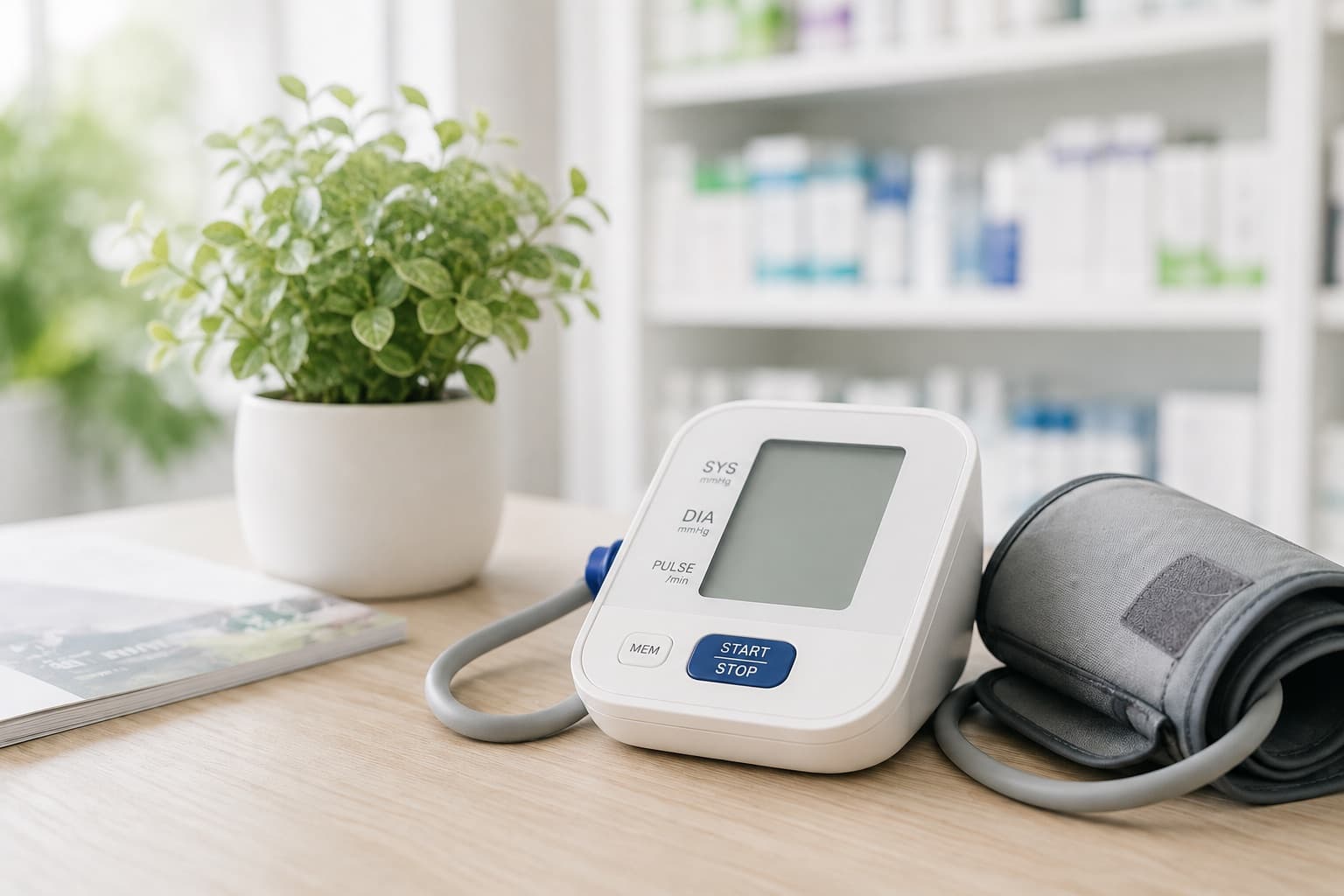
Most people have had their blood pressure taken at some point. You sit down, a cuff goes on your arm, it squeezes for half a minute, and you get two numbers. If the numbers look fine, you go about your day and think no more about it.
The trouble is that blood pressure does not stay still. It rises when you rush in the door, when you are stressed at work, when you are worried about what the reading might say. It falls when you rest, and it should fall again while you sleep. One reading, taken at one moment, in one room, is a single frame from a very long film.
That is the gap our 24 hour blood pressure monitoring service is designed to close.
Why this matters more than most people realise
High blood pressure is remarkably common in Ireland, and remarkably quiet.
Research published in January 2026 by TILDA, the Irish Longitudinal Study on Ageing at Trinity College Dublin, followed more than 8,000 people over twelve years. It found that between 63 and 71 per cent of people over 50 in Ireland have high blood pressure, and that only 56 per cent of them are aware of it. Around 445,000 people aged 50 and over are living with blood pressure that is undiagnosed, untreated, or treated but still not under control.
The World Health Organisation describes hypertension as a silent killer for a reason. It very rarely causes symptoms. You cannot feel it. Nothing hurts. In the words of Dr Caoimhe McGarvey, who led the TILDA research, high blood pressure is a common and treatable condition, but left untreated it can cause heart disease, kidney disease, stroke and dementia.
The encouraging half of that story is what happens when it is found and treated. A large review published in The Lancet found that every 10 mmHg reduction in systolic blood pressure, the top number, was linked to a 27 per cent lower risk of stroke, a 28 per cent lower risk of heart failure, a 17 per cent lower risk of coronary heart disease, and a 13 per cent lower risk of dying from any cause.
That is the whole point of testing. Nothing about high blood pressure is inevitable, as long as somebody finds it.
What 24 hours shows that one reading does not
When your blood pressure is measured continuously through an ordinary day and an ordinary night, three things become visible that a single check simply cannot show.
Blood pressure that only rises in the clinic. Some people have perfectly normal blood pressure in daily life, but it climbs the moment a healthcare professional puts a cuff on their arm. It is sometimes called white coat hypertension, and it is thought to affect around 13 per cent of people tested, rising to roughly one in five of those whose readings look mildly high. Without a proper picture, these patients can end up on medication they never needed.
Blood pressure that hides during the check. This is the more worrying one, and it works the other way around. The clinic reading looks fine, so nobody investigates further, but blood pressure is genuinely high during normal daily life. Studies put this at about 13 per cent of the general population, and among people whose readings appear well controlled, as many as one in three. A standard check misses these people completely.
What happens while you sleep. Blood pressure is supposed to dip overnight. When it does not, that carries real weight. Night time readings are a stronger predictor of heart disease and stroke than either clinic readings or daytime readings, and there is no way to capture them other than wearing a monitor to bed.
The evidence behind all of this is unusually strong. A study published in The Lancet in 2023 followed more than 59,000 patients across 223 primary care centres in Spain for close to ten years. It found that 24 hour monitoring was almost five times more informative about a person's risk of dying than a clinic reading, and that the night time readings alone were about six times more informative.
This is also why the guidelines have moved. NICE guidance recommends offering 24 hour monitoring to confirm a diagnosis when a clinic reading falls between 140/90 and 180/120. The European Society of Cardiology's 2024 guidelines give out of office measurement its strongest possible recommendation for both diagnosing and managing high blood pressure, with repeat clinic readings suggested only when monitoring is not practical.
What actually happens when you book in
It is far less of an ordeal than most people expect.
You call in to us and we fit a small, lightweight monitor. It clips to your belt or sits in a pouch, and a normal blood pressure cuff goes on your upper arm, under your sleeve. We take a first reading with you, show you how it works, and answer whatever you want to ask.
Then you go home and have a completely normal day.
The cuff inflates roughly every 20 to 30 minutes during the day and every 30 to 60 minutes overnight. Most devices give you a short beep or a gentle warning about half a minute beforehand, so you can keep your arm still and relaxed while it takes the reading. Each one takes under a minute.
A few practical notes. Keep to your usual routine, because that is exactly what we want to measure. Avoid heavy lifting and strenuous exercise while you are wearing it. The monitor cannot get wet, so no shower or bath until it comes off. And yes, it will most likely wake you once or twice during the night. That is not a fault, that is the part of the test doing the heavy lifting.
The next day you drop the monitor back to us. We download the readings and produce a full report, showing your daytime average, your night time average, your overall 24 hour average, and how your blood pressure behaved across the day. A pharmacist will talk you through what it shows in plain language.
One thing worth explaining, because it catches people out: the thresholds for a 24 hour test are lower than the 140/90 figure most people have heard. Because the test averages hundreds of readings rather than capturing one high moment, hypertension is generally indicated by a 24 hour average of 130/80 or above, a daytime average of 135/85 or above, or a night time average of 120/70 or above.
What we have seen in the pharmacy
We have had patients come in for this test with no symptoms whatsoever, expecting nothing in particular, and leave with readings that clearly needed following up. Some had been told previously that their blood pressure was fine. Others had simply never had it properly checked.
In those cases the outcome is the same. They go to their GP with a full 24 hour report in hand, and a conversation starts that would not otherwise have happened. Finding raised blood pressure early, before it has had years to quietly do damage, is one of the most useful things that can happen in a pharmacy.
That is not a dramatic story. There is no emergency, no crisis, no scare. It is just somebody finding out something worth knowing, in time to do something about it.
Who should think about booking
This test is worth considering if you:
- have had a high or borderline reading and want to know whether it is real
- have been told you have white coat syndrome, or you know your readings go up in medical settings
- are already on blood pressure medication and want to see how well it is holding across a full day and night
- have a family history of high blood pressure, stroke or heart disease
- are over 40 and have not had your blood pressure properly assessed
- have diabetes, kidney problems, or another condition where blood pressure really matters
- are simply curious, and would rather know than not know
Booking with us
Our 24 hour blood pressure monitoring service is available at Finnegan's Pharmacy in Sallynoggin. You can book online, or call in and talk to us first if you would prefer to ask a few questions before committing to anything.
You will be fitted in a few minutes, you will have your results and a pharmacist's explanation the following day, and you will have something genuinely useful to bring to your GP if anything needs following up.
This service supports the care you get from your GP rather than replacing it. If your results suggest your blood pressure needs attention, we will always recommend you speak with your doctor, and we will give you a full report to bring with you. If you ever feel unwell, have chest pain, or are concerned about your health, contact your GP or emergency services straight away.